
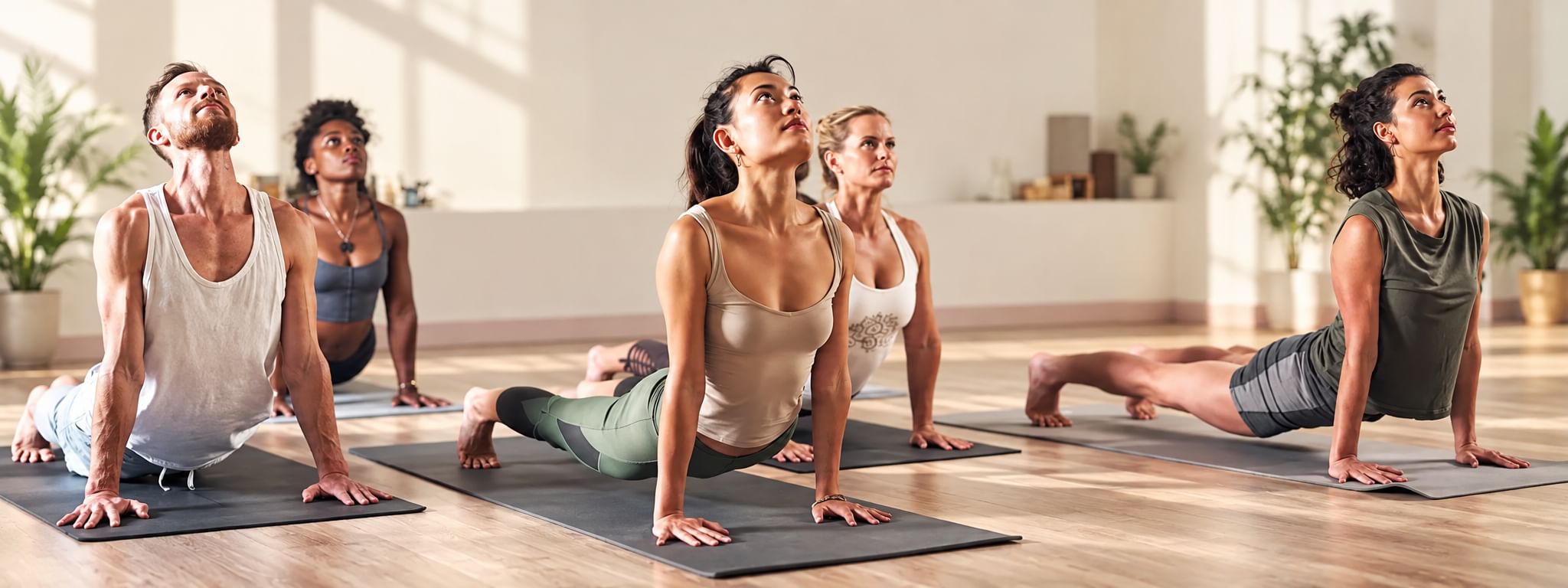
Pilates vs Yoga: What's the Difference?
Pilates and yoga get compared all the time because they both build strength, improve flexibility, and help you move with more control. If you have ever wondered whether they are basically the same thing, they are not. They come from different traditions, focus on different outcomes, and feel very different once you get into a typical Pilates class or yoga session.
The best choice usually depends on what you want right now - less stress, fewer aches, stronger core muscles, better posture, improved mobility, or a bit of everything.
The Real Difference in One Line (And Why It Matters)
Yoga is a broad mind-body practice rooted in ancient tradition, often combining movement with breathing, meditation, and mindfulness.
Pilates is a modern physical training method focused on controlled strength, alignment, core stability, and efficient movement patterns.
That single difference changes the whole experience. Yoga tends to feel more holistic and reflective, while Pilates often feels more like precision training for your body mechanics.
Origins That Shape the Whole Vibe
Yoga has been practised for thousands of years, with many styles evolving over time. Even in a purely movement-based class, yoga commonly keeps some connection to breathwork and inner focus.
Pilates was created in the early twentieth century by Joseph Pilates, originally as a system to improve physical conditioning and rehabilitation. That practical foundation is still obvious today - Pilates teachers talk a lot about posture, spinal alignment, control, and building stable strength that carries into daily life.
What You Actually Do in a Typical Class
In yoga, you move through poses (asanas). Depending on the style, you might hold positions for a while, flow steadily from one pose to the next, or focus on deep stretching with props. The pace can range from very gentle to very athletic.
In Pilates, you do a series of controlled exercises designed to strengthen the core and improve movement quality. Mat Pilates uses bodyweight and small equipment (like bands or soft balls). Reformer Pilates uses a spring-based machine that adds resistance and support, making it easier to scale up or down.
Both can be challenging, but the challenge tends to show up differently. Yoga often tests balance, flexibility, and the ability to stay calm under effort. Pilates often tests control, endurance in smaller stabilising muscles, and your ability to maintain form.
The Breath: Similar Tool, Different Purpose
Both yoga and Pilates use breathing deliberately, but with different goals.
Yoga breathing may be used to calm the nervous system, build heat, or support mindfulness. In some styles, breath is the rhythm that guides the whole flow.
Pilates breathing is usually more technical. You will often inhale to prepare and exhale during the effort, using the exhale to help engage the deep abdominal muscles and support the spine. It is less about meditation and more about mechanics - though many people still find it calming.
Strength Gains: Pilates Usually Wins on Core and Control
If your main goal is to build functional strength and a steadier core, Pilates tends to be the more direct route. It targets deep core muscles, glutes, hips, and the muscles that stabilise your shoulders and spine. Over time, that can translate into better posture, fewer back niggles, and more efficient movement.
Yoga absolutely builds strength too, especially in styles with lots of weight-bearing poses (think planks, chair pose, arm balances). The difference is that yoga strength often comes as part of a wider practice, rather than the central objective.
If you are deciding based on results, it can help to think of Pilates as strength and stability first, flexibility second. Yoga is more variable - some classes feel like mobility and recovery, others feel like a full-body workout.
Flexibility and Mobility: Yoga Often Has the Edge
Yoga is widely known for improving flexibility, and for good reason. Many classes prioritise lengthening muscles, opening hips, improving spinal mobility, and holding stretches long enough to make real changes.
Pilates improves mobility too, but usually through controlled range of motion rather than long holds. You may feel looser after Pilates, yet it is often a ‘strong and long’ sensation rather than a deep stretch-focused session.
If you are stiff, either can help. If you want a practice that repeatedly puts flexibility front and centre, yoga is more likely to do that.
Mindset Benefits: Yoga Leans Reflective, Pilates Leans Focused
Yoga often includes mindfulness, a sense of grounding, and sometimes meditation or relaxation at the end. Many people use it as a stress-management tool as much as a physical workout.
Pilates tends to be mentally engaging in a different way. Because the movements are precise, you need focus and body awareness. It can be a brilliant ‘switch-off’ because you have to concentrate, but it is usually less explicitly reflective than yoga.
If you are looking for something that supports sleep, anxiety management, and feeling calmer day to day, yoga is often the first port of call. If you want something that makes you feel organised in your body and sharper in your movement, Pilates is hard to beat.
Injury Support and Back Pain: Which Is Better?
Both can be helpful, but context matters.
Pilates is frequently recommended for posture issues and lower back pain because it strengthens the supporting muscles around the spine and trains better alignment. Reformer Pilates can be especially adaptable because springs provide assistance or resistance, making it easier to work safely.
Yoga can help back pain too, particularly when tight hips, hamstrings, or stress-related tension are part of the picture. The risk with yoga is that some people push too far into stretches or hold positions that are not right for their body, especially in fast-paced classes.
If you are managing an injury, pregnancy, or a medical condition, it is worth choosing a beginner-friendly class and letting the instructor know. When in doubt, speak with a qualified health professional before starting a new programme.
Calories and Fitness: The Honest Answer
Neither Pilates nor yoga is automatically a ‘fat-burning’ workout. The calorie burn depends on intensity, class type, and your current fitness.
A dynamic yoga flow can be surprisingly sweaty and cardiovascular. Pilates can be demanding, especially in longer sessions or when using resistance. But if your main goal is cardio fitness, you might pair either practice with walking, cycling, swimming, or another aerobic activity.
Many people find that Pilates or yoga supports body composition indirectly by improving consistency, reducing aches, and helping them move more, more often.
Pilates vs Yoga for Beginners: What Feels Easier?
Beginners often find yoga easier to access because it requires minimal equipment and classes are widely available. That said, some yoga poses can feel awkward at first, especially if you have tight hamstrings, limited shoulder mobility, or wrist sensitivity.
Pilates can feel more ‘technical’ early on because small alignment cues matter. You might hear instructions about rib position, pelvic tilt, neutral spine, and controlled breathing that take time to understand. The payoff is that once it clicks, you often feel rapid improvements in stability and posture.
If you feel self-conscious, both are beginner-friendly when the class is labelled clearly. Look for ‘beginner’, ‘gentle’, ‘foundations’, or ‘basics’ sessions.
Picking the Right Style So You Do Not Waste Time
Not all yoga is the same, and not all Pilates is the same. If you tried one class and did not enjoy it, you might simply have tried the wrong style.
Yoga styles you might see include slower, stretch-focused sessions and more athletic flow-based classes. Pilates commonly appears as mat-based sessions, or reformer classes with equipment.
If you want a calmer, more restorative practice, seek gentler yoga styles. If you want a strong training feel without heavy impact, try Pilates, especially if posture and core support are priorities.
Can You Do Both Without Overdoing It?
Yes, and they often complement each other beautifully. Pilates can build the stability that makes yoga poses feel safer and more controlled. Yoga can improve mobility and recovery, making Pilates feel smoother and more comfortable.
A simple approach is to do Pilates one to three times a week for strength and control, and add yoga one to three times a week for mobility and stress relief. The right balance depends on your schedule, goals, and how your body responds.
If you are also doing gym training or running, Pilates can support joint alignment and core stability, while yoga can help you recover and stay mobile.
A Quick Choice Guide (If You Are Still Unsure)
If your main goal is core strength, posture, and controlled full-body conditioning, Pilates is likely the better starting point.
If your main goal is flexibility, relaxation, and a broader mind-body practice, yoga is likely the better starting point.
If you want a well-rounded routine and enjoy variety, combining both tends to deliver the most noticeable improvements in how you move and how you feel day to day.