
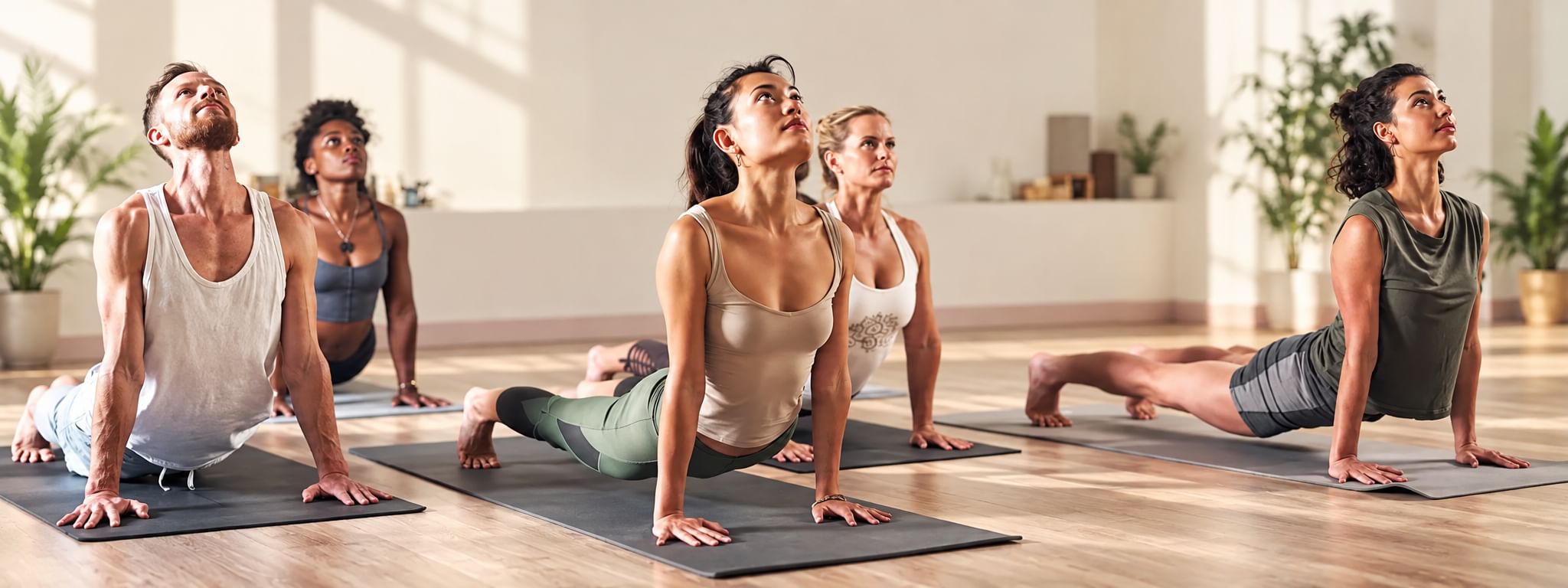
Mat Pilates for Beginners: How to Get Started
Mat Pilates is one of the most beginner-friendly ways to build strength, improve posture, and move with more control - all with minimal equipment and plenty of options to scale things up or down. If you have ever felt ‘not flexible enough’ or unsure where to start, you are exactly the kind of person mat Pilates is made for. It rewards consistency more than intensity, and the early wins (better core awareness, less stiffness, steadier balance) tend to show up quickly.
Why Mat Pilates Is a Brilliant Beginner Workout (Even If You Feel ‘Unfit’)
Mat Pilates focuses on controlled, precise movements that train your deep core muscles, hips, glutes, back, and shoulders. Unlike workouts that rely on heavy loads or high impact, Pilates is about alignment, breathing, and doing fewer reps better.
It can help you:
- Move with less tension in your neck and shoulders, especially if you sit a lot
- Build a stronger ‘corset’ of support around your trunk
- Improve mobility without pushing you into uncomfortable stretches
- Develop body awareness so everyday movements feel easier
If your goal is to feel stronger and more ‘put together’ in your body rather than simply exhausted, mat Pilates is a great fit.
The Only Equipment You Need to Start (And What Can Wait)
You can begin with nothing more than a comfortable floor space, but a few basics make sessions far more pleasant.
A thick exercise mat is worth it. Pilates involves rolling, kneeling, and lying on your back, and a thin mat can make you tense up without realising. Wear comfortable clothes that allow you to move freely - grippy socks can help if you are practising on a slippery surface.
You do not need rings, balls, or resistance bands at the start. They are useful later, but beginners get the best results from learning core control and alignment first.
How to Set Up Your First Week Without Overdoing It
The fastest way to quit Pilates is to treat it like a bootcamp. The fastest way to progress is to practise little and often.
Aim for two or three short sessions in your first week. Even 15 to 25 minutes is enough, as long as you stay focused. On non-Pilates days, a gentle walk or a few minutes of mobility work helps your body adapt.
You might feel muscles you did not know you had, especially around your lower abdomen, glutes, inner thighs, and upper back. Mild soreness is normal. Sharp pain is not - if something pinches or hurts in your back, hips, or neck, pause and adjust.
The Foundations That Make Pilates Work: Breathing, Neutral Spine, Control
Pilates is not just about the exercises - it is about how you do them.
Breathing matters because it supports your trunk and keeps you from bracing through your shoulders. In many Pilates movements, you will exhale during the effort (when you are curling, lifting, or extending), and inhale to prepare.
Neutral spine is another key concept. It means your spine keeps its natural curves rather than being forced flat into the mat or overly arched. As a beginner, you are simply looking for a comfortable, balanced position where your ribs are not flaring and your pelvis feels steady.
Control is the big one. Pilates is meant to look calm. If you are rushing, wobbling, or holding your breath, it is a sign to reduce the range of motion or take a pause between reps.
Your First Essential Moves (And How to Do Them Safely)
A smart beginner session is built around a handful of staples. You do not need dozens of exercises - you need the right ones, done well.
Pelvic tilts help you find spinal control and warm up your lower back gently. Focus on moving slowly, like you are rolling your pelvis one millimetre at a time.
Chest lift (a small curl) is often more effective than big sit-ups. Keep your chin slightly nodded as if holding a soft apple under it, and think of lifting your breastbone rather than yanking your head forward.
Toe taps are excellent for learning core stability. Start with one foot at a time, keep your pelvis still, and reduce your range if your back starts to arch.
Glute bridge strengthens your backside and supports your lower back. Press through your heels, keep your ribs heavy, and avoid flaring your ribs to lift higher.
Side-lying leg lifts train hips and glutes without stressing your lower back. If your hip flexors take over, do fewer reps and slow down.
If you want a simple routine structure, try: warm-up, core stability, glute and hip work, a little upper-body posture work, then a short stretch to finish.
Common Beginner Mistakes That Quietly Hold You Back
A few habits can make Pilates feel harder than it needs to be.
The first is doing too much too soon - big ranges of motion are not a badge of honour. Smaller, steadier movement is often the progression.
Another is gripping through your shoulders and neck. When the work feels intense, many beginners unconsciously shrug. Keep checking that your shoulders are heavy and your neck feels long.
Rushing is also a classic issue. Pilates is meant to be controlled, not fast. If you are unsure, slow down and focus on smooth breathing.
Finally, many people over-tuck or flatten their back into the mat constantly. Neutral spine is usually the goal, and you move away from it only when an exercise specifically calls for it.
How to Choose Beginner-Friendly Classes and Videos Without Getting Lost
If you are practising at home, look for sessions labelled ‘beginner’, ‘foundation’, or ‘slow flow’. A good beginner class includes frequent alignment cues, modifications, and reminders to breathe. It should not feel like an advanced core challenge disguised as ‘beginner’.
If you are going to a studio, let the instructor know you are new and mention any back, hip, wrist, or shoulder issues. Pilates teachers expect this and can offer alternatives on the spot.
If you have access to a reformer studio but want to start on the mat first, that is absolutely fine. Mat work builds control in a way that carries into every other Pilates style.
What Results to Expect (And When You Will Notice Them)
Beginners often notice posture changes and better core awareness within a couple of weeks, especially if you practise two or three times weekly. You may stand a little taller, feel more stable when walking upstairs, or notice less tightness after sitting.
Visible muscle definition depends on many factors, but Pilates reliably improves strength, endurance, and movement quality. The biggest shift is often how you feel in your body day to day - more supported, less stiff, and more coordinated.
Make It Stick: A Simple Progress Plan for the Next Month
Consistency beats intensity with Pilates. Keep your sessions manageable and repeat the same routines for a while so you can feel improvement. As movements become steadier, progress by slowing down, adding a few reps, or increasing control before you chase harder variations.
A realistic month might look like:
- Week one: learn the basics and keep sessions short
- Weeks two and three: practise two to four times weekly and repeat favourite routines
- Week four: introduce slightly longer sessions or a couple of new moves, but keep form as the priority
If you want to explore other gentle fitness options that pair well with mat work, you might also enjoy a look at low-impact workouts for beginners once you have your Pilates rhythm.
Mat Pilates works best when it feels like something you can return to, not something you have to ‘survive’. Start small, move with care, and give yourself a few weeks of steady practice - your core strength, posture, and confidence tend to follow naturally.