Do You Need to Be Flexible to Do Pilates?
Pilates is often linked with long, lean lines and bendy bodies, so it is completely normal to wonder whether you need to be flexible before you even begin. The reassuring truth is that Pilates is designed to meet you where you are. You do not need to touch your toes, do the splits, or have any special mobility to start. In fact, many people start Pilates precisely because they feel stiff, tight, or ‘out of shape’, and they want to move better.
Flexibility can be a nice side benefit over time, but it is not an entry requirement. Pilates is more about control, alignment, breathing, and building strength in a way that supports your joints and posture.
The Straight Answer: No, You Do Not Need to Be Flexible
You can start Pilates with limited flexibility, tight hips, a stiff back, or restricted shoulders. A good session is not about forcing deeper stretches. It is about moving with precision and gradually improving your range of motion safely.
Most Pilates exercises can be scaled to your current ability by changing the range of movement, adding support, adjusting your body position, or choosing a different variation. If an exercise feels too intense, it is typically a sign to modify it - not to push through and hope it loosens up.
Over time, many people do become more flexible, but that happens as a result of consistent practice combined with better muscle balance and improved control.
Why Pilates Looks ‘Flexible’ - And What Is Really Going On
Pilates often looks like flexibility because the movements are smooth and controlled, and the body is usually placed in positions that encourage length through the spine and hips. What you are actually seeing, though, is a mix of:
Strength in the supporting muscles, especially the deep core and glutes, which stabilise the body so it can move well.
Mobility through the joints, particularly the spine, hips, and shoulders.
Body awareness, so people stop bracing and start moving with less tension.
When someone appears very ‘bendy’ in Pilates, it is often because they have built the strength and coordination to use their range of movement properly - not because they were naturally flexible on day one.
Flexibility vs Mobility: The Difference That Matters in Pilates
A lot of people say ‘flexibility’ when they actually mean ‘mobility’. Flexibility is the ability of a muscle to lengthen. Mobility is the ability to move a joint through its range with control.
Pilates prioritises mobility. For example, you might improve how your spine moves segment by segment, or how your hips rotate without your lower back compensating. That is why Pilates can feel very different from a stretching-only class. You are not just pulling on muscles - you are teaching your body to move better.
This is also why Pilates can be helpful if you feel stiff from sitting at a desk, driving a lot, or doing gym training that has left certain areas tight.
The Most Common ‘Tight Spots’ - And How Pilates Works With Them
If you are worried that you are too inflexible, you are likely thinking about one or two specific areas. These are the usual culprits, and Pilates has plenty of ways to approach them safely.
Tight hamstrings are extremely common. In Pilates, you will often work hamstring length through controlled leg movements rather than aggressive stretching, so you build strength while you open up range.
Stiff hips can make some positions feel uncomfortable at first. Pilates typically strengthens the glutes and deep hip stabilisers, which can reduce gripping at the front of the hips and make hip movement feel smoother.
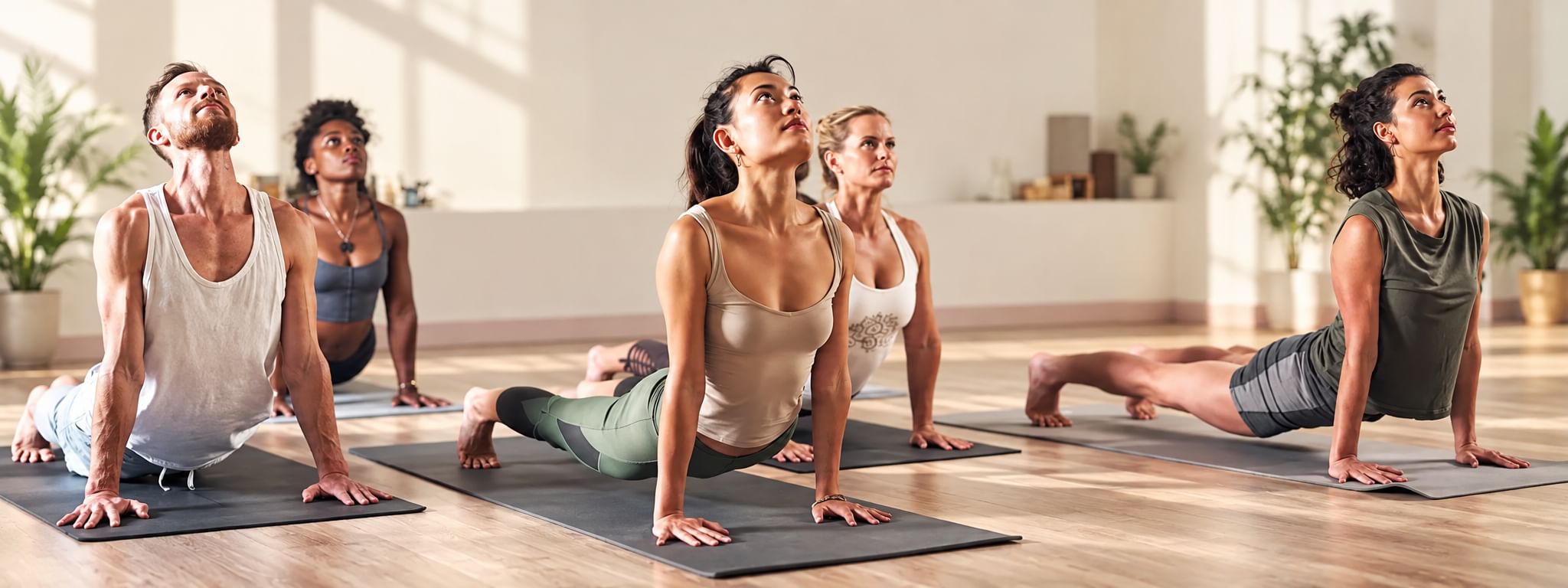
A rounded upper back and tight chest often come from desk posture. Pilates targets upper back strength, shoulder stability, and spinal extension so your posture can improve without forcing your shoulders back unnaturally.
A tight lower back is often a stability issue rather than a stretching issue. Pilates teaches the core and pelvis to organise better, which can reduce the feeling of constant tightness.
If you want a simple starting point, reading our guide on what to wear to Pilates can help you feel comfortable and supported in class, especially if you are nervous about moving in new ways.
What a Beginner-Friendly Pilates Class Should Feel Like
A well-taught Pilates session should feel challenging in a focused way, but not painful or forced. You should feel like you are learning how to place your body, breathe, and move with control, even if your range of motion is small to begin with.
Expect to hear cues around:
Keeping your ribcage and pelvis aligned rather than ‘forcing’ a stretch.
Moving slowly enough to stay in control.
Using your breath to reduce unnecessary tension.
Stopping just before you lose form.
You might feel a gentle stretch at times, but the emphasis is usually on quality of movement. If you are shaking, it is often because you are strengthening stabilising muscles that have not had to work like that before - not because you are doing something wrong.
Smart Modifications That Make Pilates Accessible to Stiff Bodies
One of the reasons Pilates suits so many people is that it is highly adaptable. Small changes can make a big difference to comfort and technique.
Bending your knees in exercises that involve hamstrings can keep your spine in a better position and stop you yanking on tight muscles. Using a cushion or folded towel for support can make seated movements more accessible if your hips are tight. Reducing the range of movement is also a valid option - doing a smaller, controlled version is often more beneficial than a bigger, sloppy one.
If you are practising at home, you might also find it helpful to start with mat work before exploring equipment-based Pilates. If you are unsure where to begin, our explainer on Pilates vs yoga can clarify the differences in approach, especially around stretching, mobility, and the overall pace.
Can Pilates Actually Improve Flexibility?
Yes, it can, but usually in a balanced way that supports your joints. Pilates tends to improve flexibility by addressing what often limits it in the first place - muscle imbalances, poor posture, and lack of control.
For example, if your hip flexors are tight, it is not always because you need to stretch them more. Sometimes they feel tight because the glutes are not doing their job properly, or because your pelvis is habitually tilted forward. Pilates strengthens the right areas, helps you find neutral alignment, and then gradually allows muscles to lengthen without strain.
Progress is typically steady rather than dramatic. You might notice first that everyday movement feels easier - walking, climbing stairs, getting out of the car, or standing up tall without effort. The ‘wow’ flexibility moments often come later, once your body trusts the stability you have built.
When Being ‘Very Flexible’ Can Actually Make Pilates Harder
It may sound surprising, but naturally flexible people can find Pilates challenging too. If you have a lot of range of motion but limited stability, it is easy to move past your ideal alignment and rely on joints and ligaments rather than muscle control.
Pilates can be brilliant for this because it teaches you to control the middle of your range, not just drop into the end range. That can improve joint support, posture, and performance in other activities, from running to strength training to dance.
So whether you are stiff or bendy, the goal is the same: controlled, strong, efficient movement.
Red Flags: What You Should Not Push Through
Pilates should not involve sharp pain, pinching, or numbness. A strong effort is fine, and mild muscular discomfort can happen when you are building strength, but pain in joints is a sign to stop and modify.
If you have an existing injury, are pregnant, or have conditions that affect joints, balance, or bone health, it is worth speaking to a qualified instructor before your first session so they can offer appropriate options. A small tweak to set-up or technique can make Pilates feel dramatically better and safer.
How to Start Pilates If You Feel Inflexible and Self-Conscious
If the biggest barrier is confidence rather than flexibility, start simple. Choose a beginner class or a short beginner programme, and give yourself permission to move in a smaller range at first. Most people in Pilates classes are focused on their own form, not judging anyone else’s flexibility.
Comfortable clothing you can move in, a mat you do not slip on, and a calm pace can make a huge difference to how quickly Pilates feels approachable. If you practise regularly - even just a couple of times a week - you will likely notice improved posture, better body awareness, and gradually easier movement in the areas that currently feel tight.
You do not need to be flexible to do Pilates. You do Pilates to move better, feel stronger, and become more comfortable in your own body - flexibility is simply one of the many things that can improve along the way.